
Dentures
Dentures
Our affordable dentures include the freedom to smile, eat, and live on your terms again.
We’ve spent decades making dentures accessible for every budget—helping millions reclaim their confidence. Everyone deserves their best smile and we can help you get yours.
Want to see what an affordable treatment journey could look like for you? Just answer a few quick questions, and we’ll make you one.

Dentures
Our affordable dentures include the freedom to smile, eat, and live on your terms again.
We’ve spent decades making dentures accessible for every budget—helping millions reclaim their confidence. Everyone deserves their best smile and we can help you get yours.
Want to see what an affordable treatment journey could look like for you? Just answer a few quick questions, and we’ll make you one.

We specialize in dentures, so you get all the benefits, none of the roadblocks.
Affordable Dentures & Implants was created to simplify tooth replacement, keep costs down, and provide care that understands what you’re going through.
We’ve seen how much dentures can change lives, so we work hard to remove the barriers that keep you from feeling like yourself again.
Why choose dentures?
 Comfortable fit
 Eat & speak confidently
 Natural appearance
 Improve face structure
 Affordable
 Non-invasiveComfortable fitEat & speak confidentlyNatural appearanceImprove face structureAffordableNon-invasive
We specialize in dentures, so you get all the benefits, none of the roadblocks.
Affordable Dentures & Implants was created to simplify tooth replacement, keep costs down, and provide care that understands what you’re going through.
We’ve seen how much dentures can change lives, so we work hard to remove the barriers that keep you from feeling like yourself again.
Why choose dentures?
Comfortable fitEat & speak confidentlyNatural appearanceImprove face structureAffordableNon-invasiveComfortable fitEat & speak confidentlyNatural appearanceImprove face structureAffordableNon-invasiveDenture Comparison
Each affiliated Affordable Dentures practice wants you to have the best denture you can afford. That’s why we offer several styles of full dentures, each with its own distinct advantages. Visit your local practice page to determine which denture styles currently are offered and delivery times.
Denture Options | 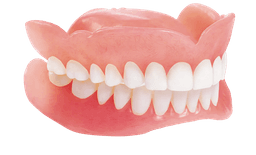 EconomyPlus More resistant to stain and wear | 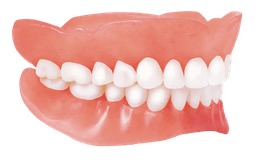 Premium Enhanced natural appeal with detailed customization | 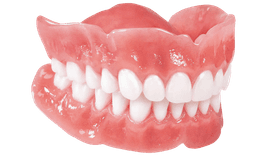 UltimateFit Best comfort & fit with top durability |
|---|---|---|---|
| Delivery Time | Same day (at some clinics) | Same day (at some clinics) | Approximately 1-3 weeks |
| Tooth Quality | Some wear resistance | High density, strong wear resistance | Superior strength & wear resistance |
| Color Choices | Standard | More choices | Most choices |
| Denture Base | Basic customization Natural look | Additional customizations Very natural look | Highly customizable Looks just like real teeth |
| Denture Preview | Yes | Yes | Yes |
| Craftsmanship Warranty | Yes | Yes | Yes |
| Explore EconomyPlus | Explore Premium | Explore UltimateFit |
Dentures solutions that will change your life (but not your budget).
Whether you need to replace several teeth or an entire upper or lower arch, you’ll find a solution that works for your smile, comfort, and budget.
Pricing is based on a single arch upper or lower denture
- EconomyPlus DenturesThis denture is more resistant to stain and wear. It also provides some customization options.
- Premium DenturesThis denture offers enhanced natural appeal, wear, and stain-resistance.
- Ultra Premium DenturesOur highest quality and longest lasting dentures. They’re stain resistant, highly customizable and offer superior strength.
* Monthly payment amounts are determined by 3rd party lenders whose terms are set for qualified buyers and assume a down payment of $0 with equal payments over 24 months and an annual percentage rate of 0%. Actual pricing may vary.
For the closest feel to natural teeth, dental implants are a realistic option.
Implant-supported solutions stay in place, look incredibly natural, and give you more of the bite strength you’re used to.
Per arch with a 2-implant package
- SNAPSecure ImplantsSnap-in dentures secured by dental implants offer patients a secure and comfortable fit, without the need for denture adhesive. Starting at price based on 2-implant package.
* Monthly payment amounts are determined by 3rd party lenders whose terms are set for qualified buyers and assume a down payment of $0 with equal payments over 24 months and an annual percentage rate of 0%. Actual pricing may vary.

Partial dentures can make your smile whole again.
If you’re missing one or several teeth, partial dentures offer an affordable, natural-looking way to bring your smile back.
Partial dentures can make your smile whole again.
If you’re missing one or several teeth, partial dentures offer an affordable, natural-looking way to bring your smile back.
Real dentures patients. Real satisfaction.

"They make you feel like family. Like we're here for you, whatever you need. You don't find that all the time anymore. When I saw my smile for the first time I was in shock just being able to feel comfortable about being out. I was embarrassed, and I'm really proud of my smile now. It looks so good and so natural. Affordable Dentures and Implants have changed my life."
– Mary, Economy Dentures Patient

New to Dentures? Save up to 40% & Get a Full Year of Care
For first-time denture wearers who need new teeth immediately following extractions, the New Denture Wearer Package delivers:
- New teeth, plus a full year of continuing care
- A post-operative check-up with your dentist
- Adjustments to ensure the best fit possible
In some offices, the package includes both a healing denture and your final denture. Check with your local office for package details, pricing, and availability, and get ready to reclaim your confidence with new teeth that fit your life and your budget.
New to Dentures? Save up to 40% & Get a Full Year of Care
For first-time denture wearers who need new teeth immediately following extractions, the New Denture Wearer Package delivers:
- New teeth, plus a full year of continuing care
- A post-operative check-up with your dentist
- Adjustments to ensure the best fit possible
In some offices, the package includes both a healing denture and your final denture. Check with your local office for package details, pricing, and availability, and get ready to reclaim your confidence with new teeth that fit your life and your budget.

Ready to begin the (easy) journey to a new you at our our practice office?
Just answer a few quick questions about what you’re experiencing, and we’ll give you an idea of what your treatment journey might look like.
Once you come in for an exam, our dentist will craft the perfect affordable plan for your mouth and your budget.

Ready to begin the (easy) journey to a new you at our our practice office?
Just answer a few quick questions about what you’re experiencing, and we’ll give you an idea of what your treatment journey might look like.
Once you come in for an exam, our dentist will craft the perfect affordable plan for your mouth and your budget.
You’ll always know what to expect with your personalized treatment plan.
Exam & X-Rays
After a welcome call, you’ll come in to meet your dentist who specializes in dentures and implants and get an initial exam and X-rays.
We’ll get familiar with your unique challenges and build a plan that addresses all of your tooth replacement needs—as well as your budget concerns.
Together we’ll craft the best possible solution that works with your budget.

Exam & X-Rays
After a welcome call, you’ll come in to meet your dentist who specializes in dentures and implants and get an initial exam and X-rays.
We’ll get familiar with your unique challenges and build a plan that addresses all of your tooth replacement needs—as well as your budget concerns.
Together we’ll craft the best possible solution that works with your budget.
Preparation For New Teeth
Once we’ve got your plan ready to go, we can take impressions, perform any necessary extractions, and fully prepare your mouth.
Depending on when your appointment is scheduled, we may be able to complete everything in the same day.
Don’t worry, you’ll never leave our clinic without teeth in your mouth.

Preparation For New Teeth
Once we’ve got your plan ready to go, we can take impressions, perform any necessary extractions, and fully prepare your mouth.
Depending on when your appointment is scheduled, we may be able to complete everything in the same day.
Don’t worry, you’ll never leave our clinic without teeth in your mouth.
Healing & Check-Ups
After your procedure, we’ll have you back in to make any necessary adjustments along the way.
Many patients are fully healed after six months, but your dentist will customize treatment that works best for your mouth.
We’ll make final adjustments and you’ll be free to smile with confidence every day.

Healing & Check-Ups
After your procedure, we’ll have you back in to make any necessary adjustments along the way.
Many patients are fully healed after six months, but your dentist will customize treatment that works best for your mouth.
We’ll make final adjustments and you’ll be free to smile with confidence every day.
Exam & X-Rays
After a welcome call, you’ll come in to meet your dentist who specializes in dentures and implants and get an initial exam and X-rays.
We’ll get familiar with your unique challenges and build a plan that addresses all of your tooth replacement needs—as well as your budget concerns.
Together we’ll craft the best possible solution that works with your budget.
Exam & X-Rays
After a welcome call, you’ll come in to meet your dentist who specializes in dentures and implants and get an initial exam and X-rays.
We’ll get familiar with your unique challenges and build a plan that addresses all of your tooth replacement needs—as well as your budget concerns.
Together we’ll craft the best possible solution that works with your budget.
Preparation For New Teeth
Once we’ve got your plan ready to go, we can take impressions, perform any necessary extractions, and fully prepare your mouth.
Depending on when your appointment is scheduled, we may be able to complete everything in the same day.
Don’t worry, you’ll never leave our clinic without teeth in your mouth.
Preparation For New Teeth
Once we’ve got your plan ready to go, we can take impressions, perform any necessary extractions, and fully prepare your mouth.
Depending on when your appointment is scheduled, we may be able to complete everything in the same day.
Don’t worry, you’ll never leave our clinic without teeth in your mouth.
Healing & Check-Ups
After your procedure, we’ll have you back in to make any necessary adjustments along the way.
Many patients are fully healed after six months, but your dentist will customize treatment that works best for your mouth.
We’ll make final adjustments and you’ll be free to smile with confidence every day.
Healing & Check-Ups
After your procedure, we’ll have you back in to make any necessary adjustments along the way.
Many patients are fully healed after six months, but your dentist will customize treatment that works best for your mouth.
We’ll make final adjustments and you’ll be free to smile with confidence every day.
Want to learn more about dentures before you decide?

- #Dentures
- #Explainer
What Are Dentures Made Of?
Modern dentures are made of a few different materials but are most commonly made from plastic, specifically acrylic resin, and designed to maximize your comfort while restoring your ability to eat, talk, and smile.

- #Dentures
- #Explainer
Partial Dentures Explained
Partial dentures are just what they sound like. Unlike full dentures which replace one full arch of your teeth, these tooth replacement solutions replace just a few teeth on either the upper or lower half of your mouth.

- #Dentures
- #Explainer
How Long Do Dentures Last?
Understanding the lifespan of dentures is crucial for maintaining good oral health and ensuring maximum comfort. Read on for information on the lifespan of dentures and tips for prolonging their longevity.
Dentures can change your life without breaking your budget.
Everyone deserves their best smile—so we do our best to make dentures affordable for all. That includes accepting multiple financing options and standing behind our work.
Note: Not all services are available at all Affordable Dentures & Implants locations. Financing is based on credit-worthiness and not all patients will be approved. *Subject to credit approval.

Dentures can change your life without breaking your budget.
Everyone deserves their best smile—so we do our best to make dentures affordable for all. That includes accepting multiple financing options and standing behind our work.
Note: Not all services are available at all Affordable Dentures & Implants locations. Financing is based on credit-worthiness and not all patients will be approved. *Subject to credit approval.


See answers to frequently asked questions.
Dentures are custom-made replacement teeth designed to restore your smile when one or more natural teeth are missing. They help you eat more comfortably, speak more clearly, and feel more confident in everyday life.
More specifically, wearing dentures can provide the following benefits:
- Ease your stress and anxiety about smiling
- Eliminate many diet restrictions
- Help you speak more confidently
- Keep facial muscles from sagging
- Retain muscle tone in your face, jaw and neck
- Live your life to the fullest
Modern dentures are carefully crafted to look natural and fit your mouth—not the bulky, one-size-fits-all dentures many people still imagine. Depending on your needs, dentures can replace a few missing teeth or a full row, and they’re designed to support your facial structure as well as your bite.
Dentures are removable, which makes them easier to clean and maintain. For some people, they’re a starting point on the journey to better oral health. For others, they’re a long-term solution that provides reliable comfort and function. There are also options that use dental implants for added stability, giving you more confidence when eating and speaking.
If you’re new to tooth replacement, learning about your options can help you feel more in control. You can explore the different types of dentures available by visiting our Dentures page, or take our Treatment Finder to get an idea of which solutions may fit your situation.
You don’t need to have everything figured out right away. A visit to a nearby office can help you understand what’s possible and what makes sense for you. When you’re ready for personalized guidance, booking an appointment is the easiest way to get clear answers and next steps.
If missing teeth are starting to affect how you eat, speak, or feel about your smile, it’s understandable to wonder whether dentures are the right next step. You deserve teeth that let you live comfortably—and confidently.
Dentures are often recommended when one or more missing teeth begin to interfere with daily life. Trouble chewing certain foods. Avoiding conversations or smiling. Jaw discomfort. Even subtle changes like these can be signs that your mouth is working harder than it should.
When gaps in your smile are left untreated, nearby teeth can shift out of place over time. That movement can lead to bite problems, pain, and gradual bone loss in the jaw. As the jawbone shrinks, it may change the shape of your face and make you appear older than you feel. Replacing missing teeth helps support your facial structure and protects the healthy teeth you still have.
The good news—you have options. Whether you’re missing a single tooth, several teeth, or a full arch, there are denture solutions designed to restore function, comfort, and appearance. During a consultation, your dentist will take X-rays, evaluate your oral health, and talk through what makes the most sense for your needs and your budget. Learn more about denture options on our Dentures page.
You don’t need to decide anything today. If you’re ready for answers and guidance, booking an appointment is the best place to start or you can answer a few quick questions in our Treatment Finder to get an idea of potential solutions for your unique situation.
If you’re exploring dentures for the first time, the number of options can feel overwhelming. That’s completely normal. The right denture depends on how many teeth you’re missing, your oral health, your lifestyle, and what feels right for your budget.
Here’s a simple breakdown of the most common types of dentures and what they’re designed to do.
Full or complete dentures are used when all teeth in the upper or lower arch are missing. They rest on the gums and are custom-made to restore your smile, chewing ability, and facial support.
Partial dentures are an option if you still have some healthy natural teeth. They fill in the gaps and help keep remaining teeth from shifting out of place.
Immediate or temporary dentures are placed right after tooth extractions. They allow you to leave the office with teeth the same day, helping maintain your appearance while your gums heal and change shape.
Snap-on dentures—also called implant-retained dentures—attach securely to dental implants for added stability. Many people choose this option for a more confident bite and less movement when eating or speaking.
Implant-supported dentures use implants to support some or all of the denture, offering a long-term solution that can feel more secure than traditional dentures alone.
You can explore these options in more detail on our Dentures page.
Dentures can also be made from different materials, such as acrylic, resin, or metal frameworks, depending on the type and design. Your dentist will help explain the differences and what makes sense for your mouth.
The good news—you don’t have to figure this out on your own. If you’d like a quick starting point, our Treatment Finder can help you see which solutions may fit your situation. And when you’re ready for personalized answers, booking an appointment at a nearby office is the best way to get clear guidance, exact options, and upfront pricing.
There isn’t one “better” option for everyone. The right choice depends on your oral health, your goals, your budget, and what feels right for your life right now.
Dental implants are often chosen for their stability and natural feel. Because they’re anchored in the jaw, many people find they feel more like natural teeth when eating or speaking. Implants can be a great long-term solution, but they do tend to cost more and aren’t the right fit for everyone. Factors like bone health, healing ability, and overall medical history can affect whether implants are recommended.
Dentures are a reliable and more accessible option for many people. Today’s dentures are custom-made, comfortable, and designed to look natural. For patients who aren’t candidates for implants, or who prefer a lower upfront cost, high-quality or premium dentures can restore function, appearance, and confidence very effectively.
During a visit, your dentist will evaluate your mouth, review your options, and talk through the pros, cons, timing, and costs of each solution so you can make an informed decision. If you’d like a starting point before coming in, our Treatment Finder can help you explore which options may make sense based on your situation.
You don’t have to decide everything at once. Booking an appointment is simply a way to get clear answers, personalized guidance, and a plan that works for you.
How long dentures last depends on a few key factors, and the good news is that many of them are within your control.
First, it depends on the type of denture you receive. Temporary or immediate dentures are designed to be short-term solutions and typically last 6–8 weeks while your mouth heals. More permanent denture solutions often last about 5–10 years, and in some cases longer, depending on how they’re made and how they’re used.
Fit and care also play an important role. As your gums and jaw naturally change over time, dentures can loosen and may need adjustments or relines to stay comfortable and functional. Keeping up with proper daily care and regular check-ins with your dentist can help extend the life of your dentures and protect your oral health.
Some options, such as dentures supported by dental implants, may offer added stability and durability for people looking for a longer-term solution. Your dentist can help explain what lifespan you can expect based on your needs, lifestyle, and budget.
If you’d like help exploring which denture options may work best for you, our Treatment Finder is a good place to start. And for a personalized recommendation and clear expectations, booking an appointment with a nearby office is the best way to get answers tailored to you.
The timeline can vary based on the type of denture that’s right for you and whether additional care, such as extractions, is needed.
In many cases, people are able to leave the office with dentures the same day, especially when immediate dentures are part of the treatment plan. This can be a big relief if you’re trying to avoid going without teeth.
Other situations may take a little longer. If extractions are needed, or if you choose a more customized solution, your dentist may recommend additional time to allow for healing or fabrication. For example, custom 3D dentures typically take up to seven days to create and are designed to provide an especially precise fit and added comfort. You can learn more about what to expect on our Affordable Way page.
Just book an appointment and during your visit, your dentist will explain the recommended timeline clearly so you know what to expect and why.
In dentistry, an arch refers to either your upper jaw or your lower jaw.
So when pricing or treatment is described as “per arch,” it means it applies to one full row of teeth—either the top or the bottom. For example, full dentures may replace an entire upper arch, a lower arch, or both. Partial dentures may replace just a few missing teeth within an arch.
Understanding this term can help make sense of treatment options and estimated costs, since care is often planned and priced by arch rather than for the entire mouth. If anything feels unclear, your dentist will always explain how many arches are involved and what that means for your specific treatment.
Immediate dentures are temporary dentures placed right after tooth extractions. They allow you to leave the office with teeth the same day, rather than going without teeth while your gums heal.
These dentures help maintain your appearance and make everyday activities like speaking and eating feel more manageable during the healing process. They can also help protect the gums and control swelling after extractions.
Because your mouth naturally changes as it heals, immediate dentures are not meant to be permanent. Over time, your gums will shrink and reshape, which means the fit will change. Once healing is complete, your dentist will guide you into a final, custom-made denture designed for long-term comfort and function.
When you book an appointment, your dentist will explain whether immediate dentures make sense for your situation and what the transition to your final dentures will look like, so you know exactly what to expect at each step.
Permanent dentures are dentures that are secured in place using dental implants, rather than being removed daily. They’re designed to stay firmly attached, giving you a more stable, natural-feeling solution for eating, speaking, and smiling.
These dentures are supported by implants placed in the jaw, which act as anchors for the denture. Because they don’t rely on suction or adhesives, many people find permanent dentures feel more secure and comfortable than traditional removable options.
Permanent dentures aren’t the right fit for everyone. Your oral health, bone structure, healing ability, and budget all play a role in determining whether this option makes sense. Your dentist will explain what’s possible for you and walk through the benefits, timing, and costs so you can make an informed decision.
If you’re curious whether a fixed denture solution could work for your situation, our Treatment Finder can help you explore options. Booking an appointment is the best way to get clear guidance and understand what permanent dentures could look like for you.
It’s normal for eating and speaking to feel a little different at first. Your mouth needs time to adjust to the new fit and feel of dentures, and that adjustment period looks different for everyone.
In the beginning, you may notice minor changes in speech or feel less confident when eating certain foods. This usually improves as your muscles adapt and you learn how your dentures move and function. Starting with softer foods, taking smaller bites, and practicing speaking can all help speed up the adjustment.
Well-fitted dentures are designed to stay in place during normal talking and eating. If your dentures feel loose, shift, or cause discomfort, that’s something your dentist can address with adjustments or other solutions to improve stability and comfort.
If you’re concerned about fit or long-term stability, there are also options that offer added support, including implant-retained solutions. Just book an appointment and your dentist can help you understand what will work best for your needs and lifestyle, and make sure your dentures help you feel comfortable, confident, and secure.